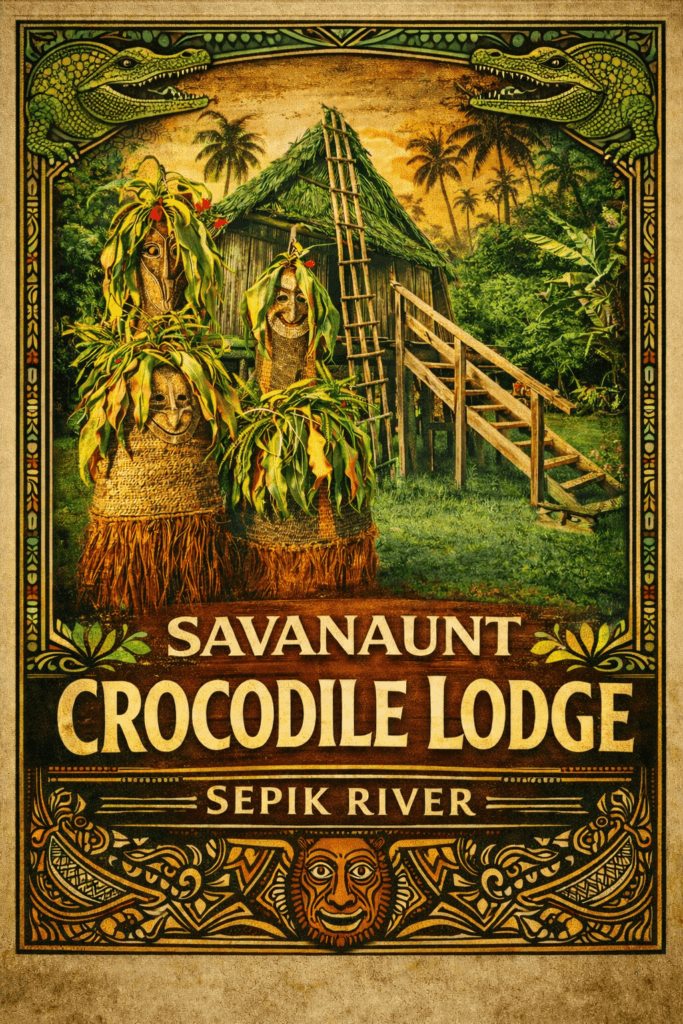
Nestled within the captivating landscapes of the Sepik Region, Savanaunt Crocodile Lodge invites intrepid travelers to embark on a unique cultural immersion experience. As the lodge undergoes construction, it graciously opens its doors to those seeking an authentic glimpse into Papua New Guinea’s rich heritage.
The lodge, featuring traditional old renovated longhouses on stilts, offers 5 rooms for a maximum of 10 guests in a group. Each room boasts private showers and toilets, seamlessly blending modern comfort with the charm of Sepik’s cultural legacy.
Upon arrival, our guests are welcomed by gracious hosts who guide them through the traditional village of Savanaunt. Despite ongoing construction, the lodge provides a sneak peek into its architectural vision, promising a distinctive and immersive stay once complete.
A highlight of the stay includes a cultural encounter, where guests witness the intricate artistry and cultural motifs adorning the surroundings. The lodge’s design integrates harmoniously with the natural environment, offering a unique perspective on the ongoing construction.
Food is basic but enough, also try to eat as the locals and ask for Crocodile on the menu, its their main food source and also Sago,
Engaging with the local community, guests learn about the significance of crocodiles in the culture and the efforts to preserve this delicate balance.
As night falls, guests retire to their comfortable rooms in the traditional longhouse, where the sounds of nature serve as a lullaby. The rustic charm of Savanaunt Crocodile Lodge, combined with the warmth of local hospitality, ensures an unforgettable and enriching stay in the heart of Papua New Guinea’s cultural heritage.
Accommodation Savanaunt Crocodile Tribe Lodge Sepik River Wewak
The main longhouse at our accommodation offers a rustic yet comfortable experience in the heart of Papua’s natural beauty. With two bedrooms, each featuring a private toilet and shower area, guests enjoy a sense of privacy amid the local charm.
While modern toilets are available, the water is thoughtfully provided by locals in buckets, showcasing the community’s hospitality. For showers, fresh rainwater is heated over a campfire, offering a refreshing and eco-friendly experience. In tune with the surroundings, the rooms are equipped with small fans, ensuring a comfortable retreat during warm days and nights, although air conditioning is intentionally absent to preserve the authentic ambiance.

Main food source at the Savanaunt Crocodile Tribe Lodge
Outside crocodile meat, there is also Sago. Sago is a starchy substance extracted from the pith, or core, of various types of palm trees, particularly the sago palm (Metroxylon sagu). In Papua and other regions of Southeast Asia and the Pacific, sago has been a staple food for centuries. The process of obtaining sago involves harvesting the pith from the trunk of the sago palm, then processing and extracting the starchy granules. Once processed, sago can be used to make various dishes, including a starchy porridge or pudding. It serves as a significant carbohydrate source in the diet of many communities in Papua, where the sago palm is abundant and plays a crucial role in the local cuisine of the Savanaunt Crocodile Tribe Lodge around the Sepik River in Wewak.
Living Dinosaurs Along the Sepik: Exploring the Ancient Connection of Crocodile Tribes
The Crocodile Tribes along the Sepik River embody a unique coexistence with these ancient creatures, showcasing a profound connection between culture and nature. For generations, these tribes have engaged in traditional crocodile hunting practices, a ritual deeply rooted in their heritage. Crocodiles not only serve as a symbol but also provide sustenance, forming a crucial part of the local diet.
Intriguingly, crocodiles, living relics of a bygone era, have been on Earth for millions of years, often referred to as living dinosaurs. Their resilience and adaptability make them fascinating subjects in the study of evolution. The Sepik River, with its rich biodiversity, offers a habitat where these remarkable creatures continue to thrive.
The Crocodile Tribes’ hunting methods, passed down through generations, emphasize a balance between respecting the creature’s significance and meeting the practical needs of the community. This intricate relationship reflects the intricate tapestry of human-animal coexistence along the Sepik River, where tradition, sustenance, and ancient creatures converge and you can witness this at the Savanaunt Tribe Crocodile Lodge.
Sepik’s Tribal Tapestry: A Journey into Rich Indigenous Cultures