
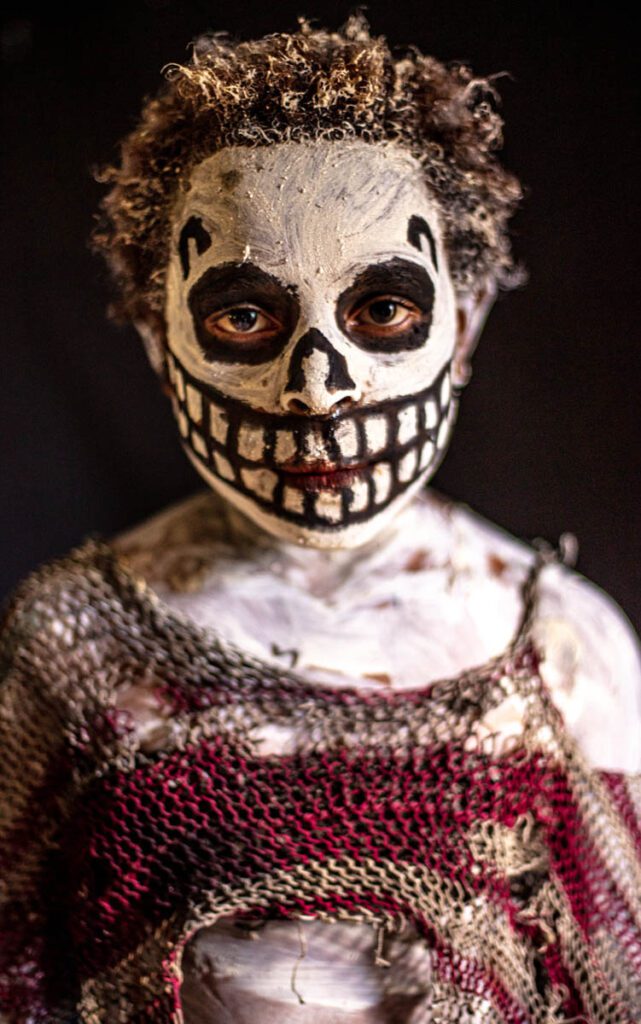
Papua New Guinea’s Skeleton Tribe: Alphonse Brugl and the Living Traditions of Mindima
In the highlands of Papua New Guinea, white bones painted on blackened skin tell a story inherited from grandparents, reshaped by two brothers and carried forward by their children. Behind the striking appearance of Mindima’s Skeleton performers is Alphonse Brugl—a village magistrate whose life connects ancestral legend, artistic invention and the growing importance of community tourism.
Based on an interview organised and conducted by David Van Driessche, expedition organiser with Tribes of Papua New Guinea. With contributions and interpretation from Chimbu into English by Alphonse’s son, Kawage Nick Brugl.
A medical journal might seem an unlikely place to find a turning point in the story of a Papua New Guinean cultural tradition. Yet for Alphonse Brugl, an illustration of the human skeleton offered a new way to paint a story he already knew.
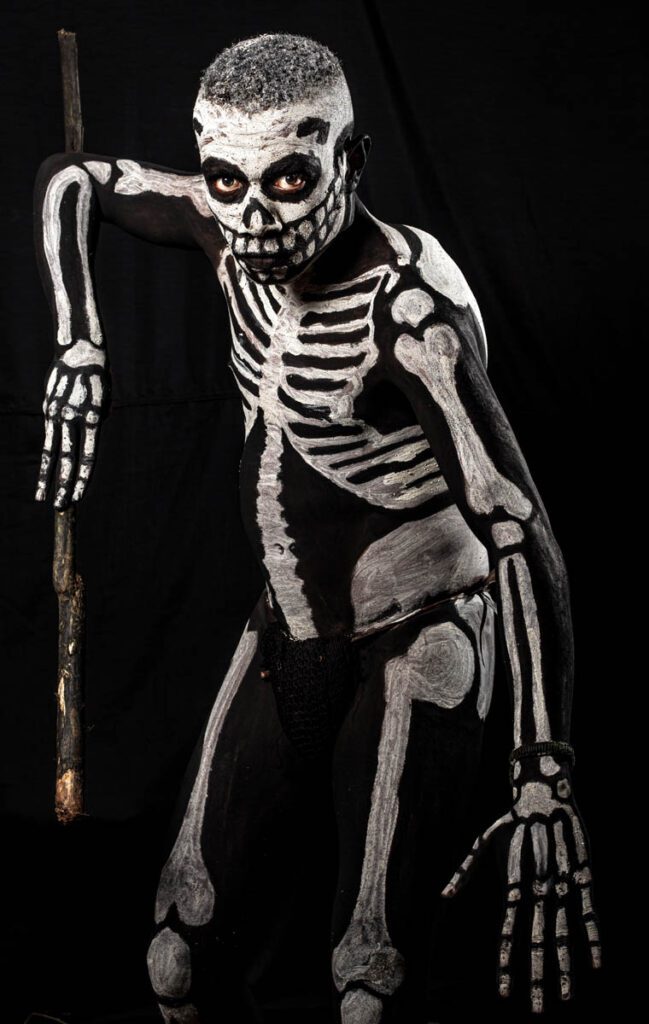
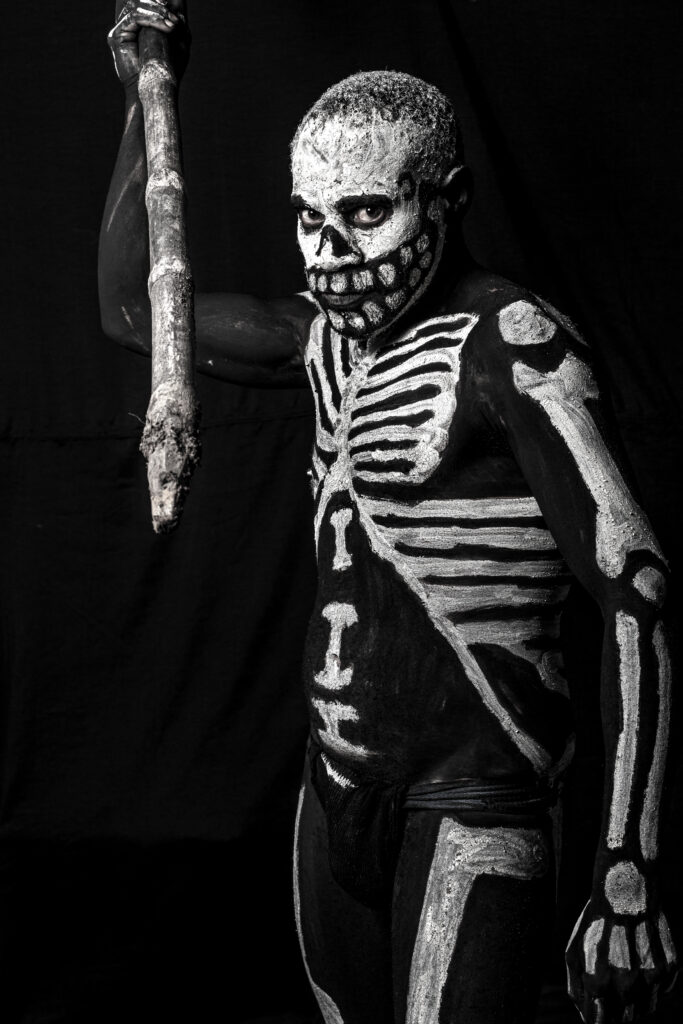
Missionaries had brought the journal into the area in the 1960s. When Alphonse obtained it in the following decade, he found a complete skeleton printed on its pages. The bones had a precision that the body paintings of his childhood did not. Together with his older brother, Kolkia Dominic Brugl, he used the illustration to improve the details of the bones they painted on their bodies.
The story behind those bones was much older than their experiment. Their parents and grandparents had performed it before them. The brothers inherited its characters, its danger and its victory; the medical illustration helped them give its skeletal figures a more detailed appearance.
That encounter between an inherited performance and an unfamiliar book helps explain the Skeleton tradition as Alphonse describes it today. Its continuity lies in people remembering, practising and teaching it, while also making choices about how it should look.
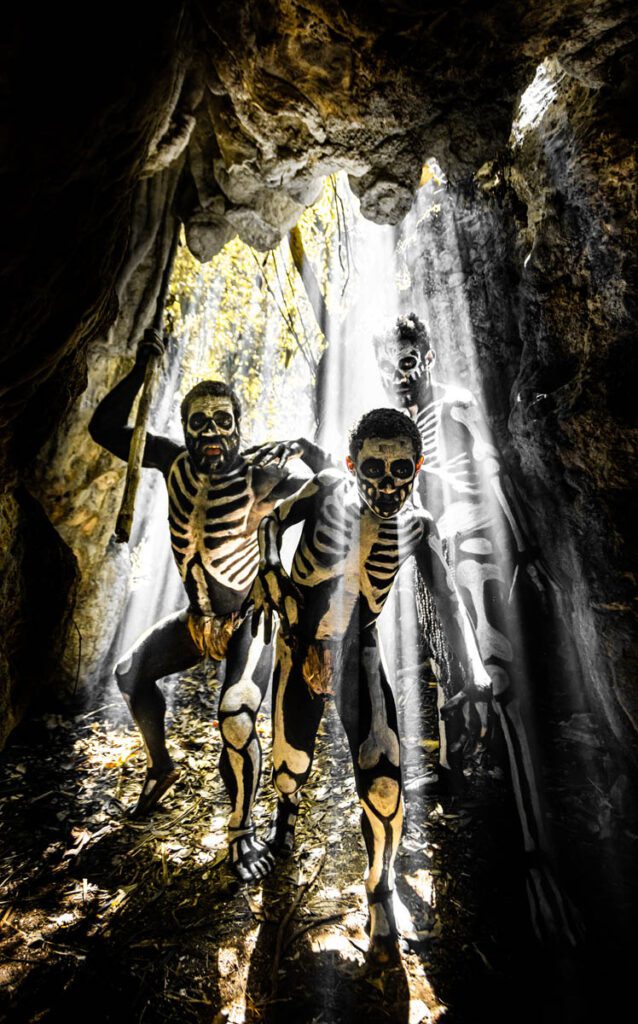
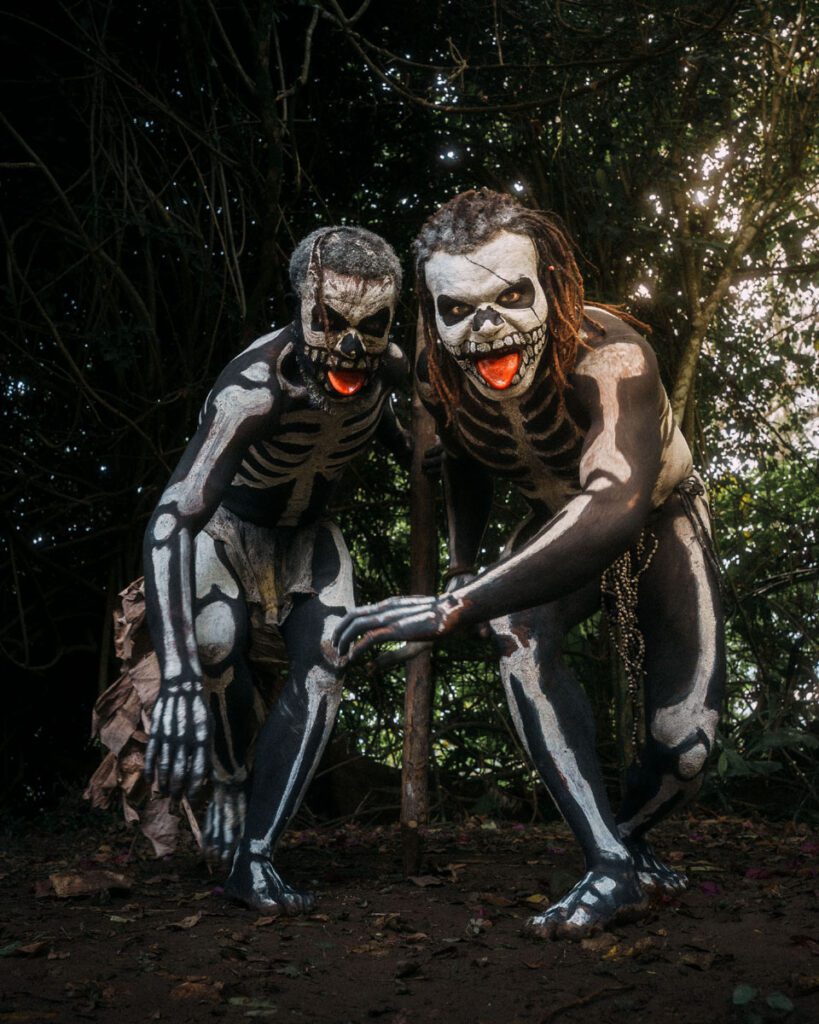
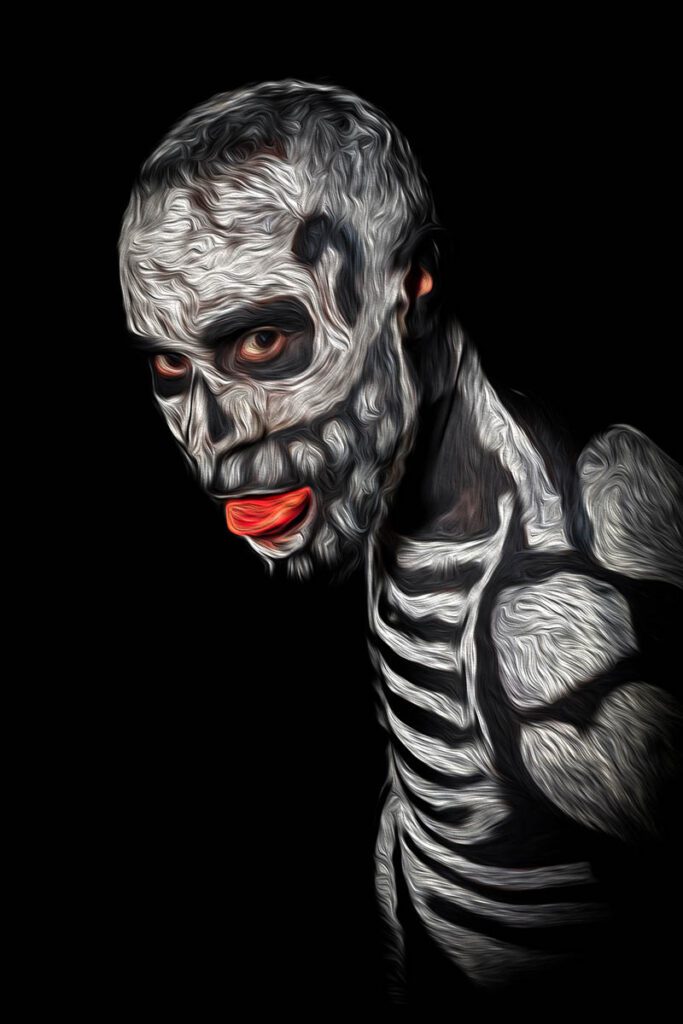
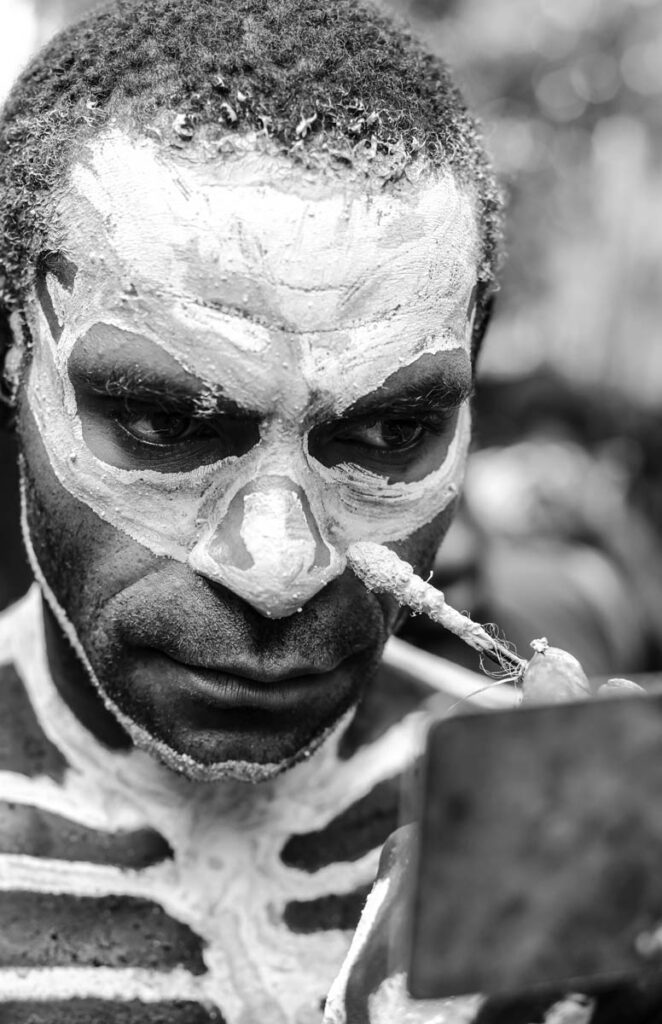
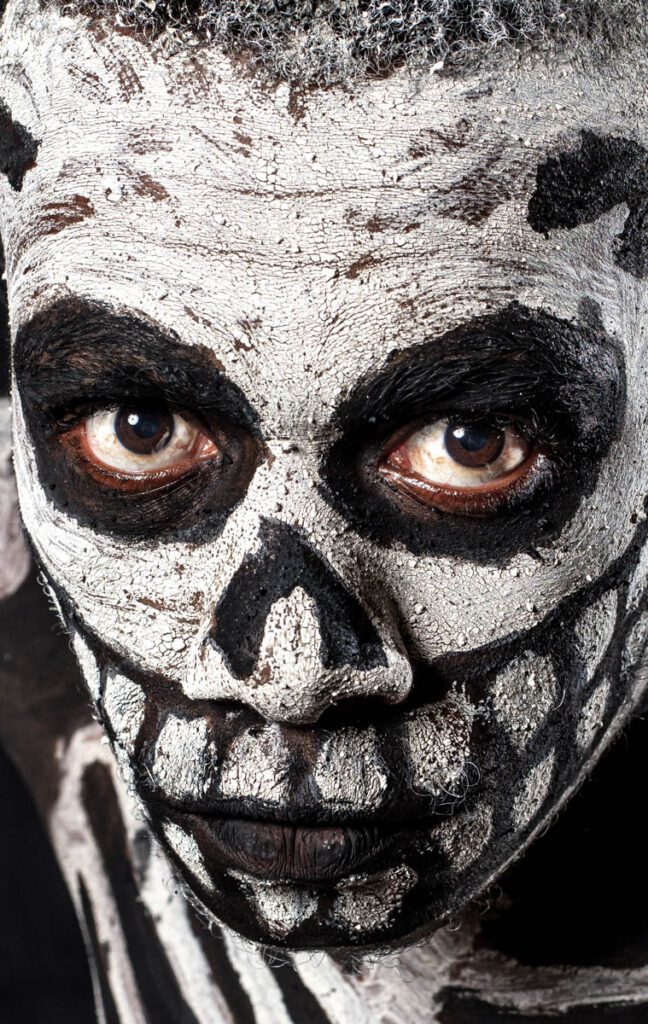
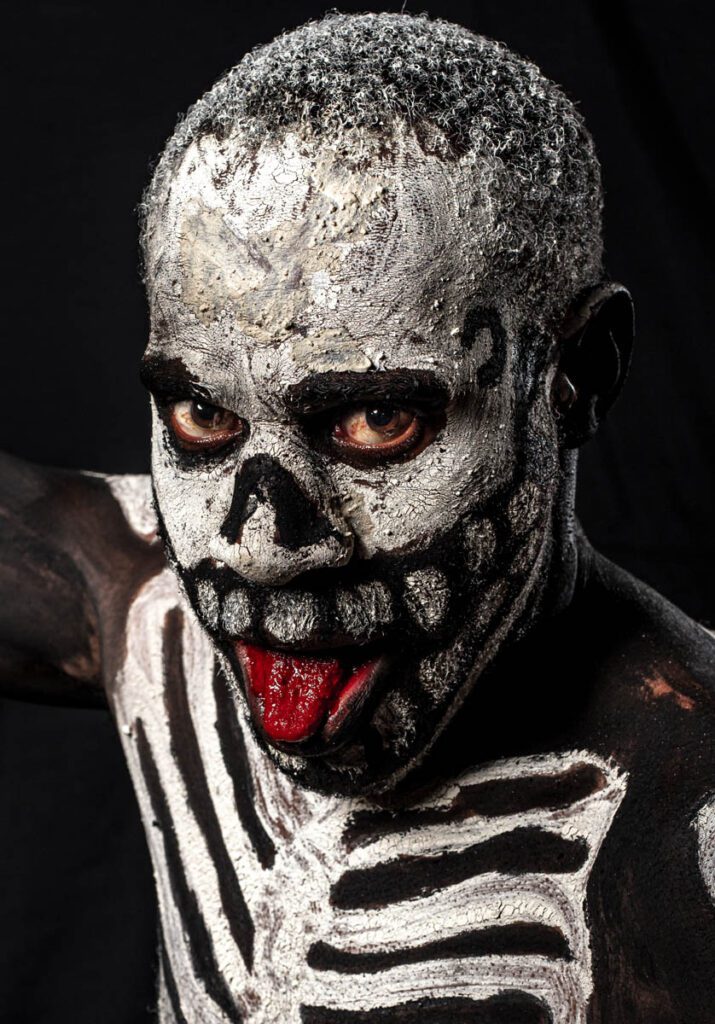
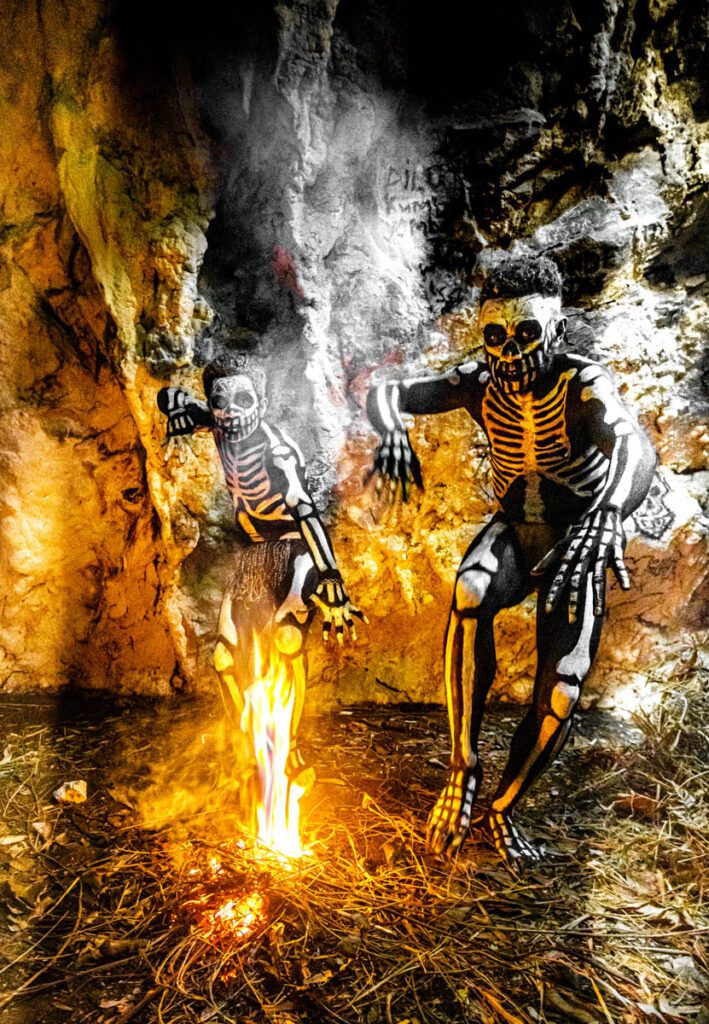
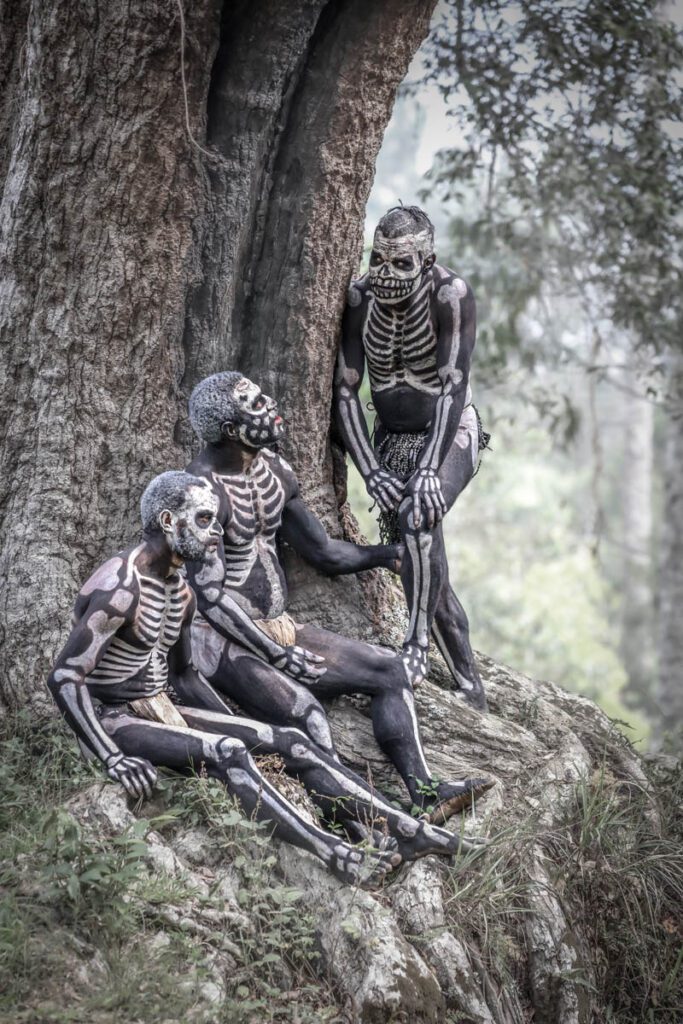
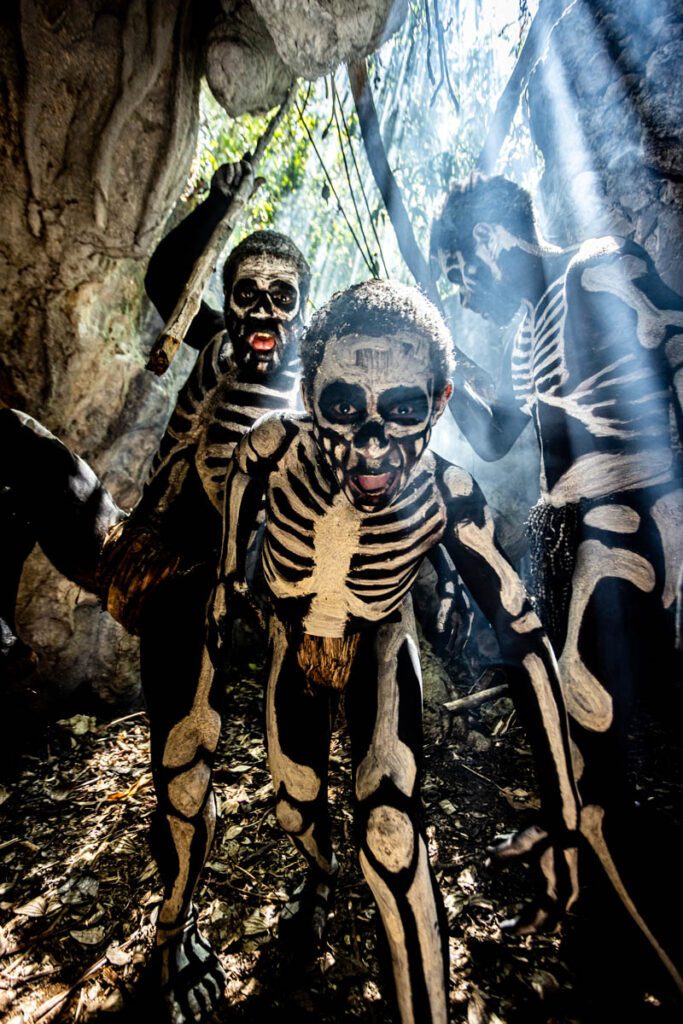
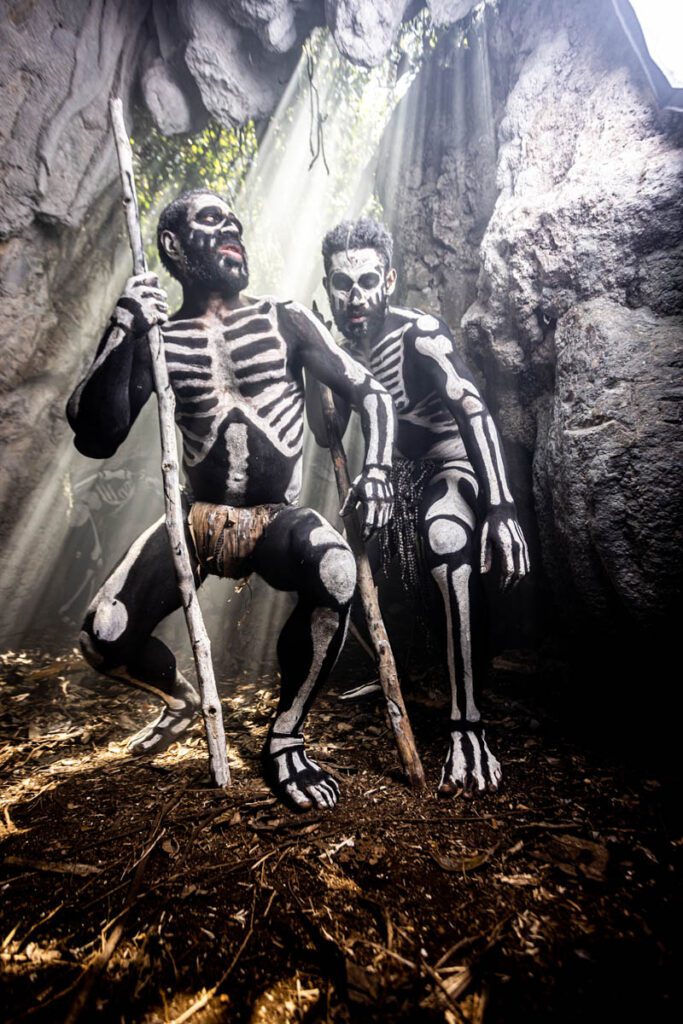
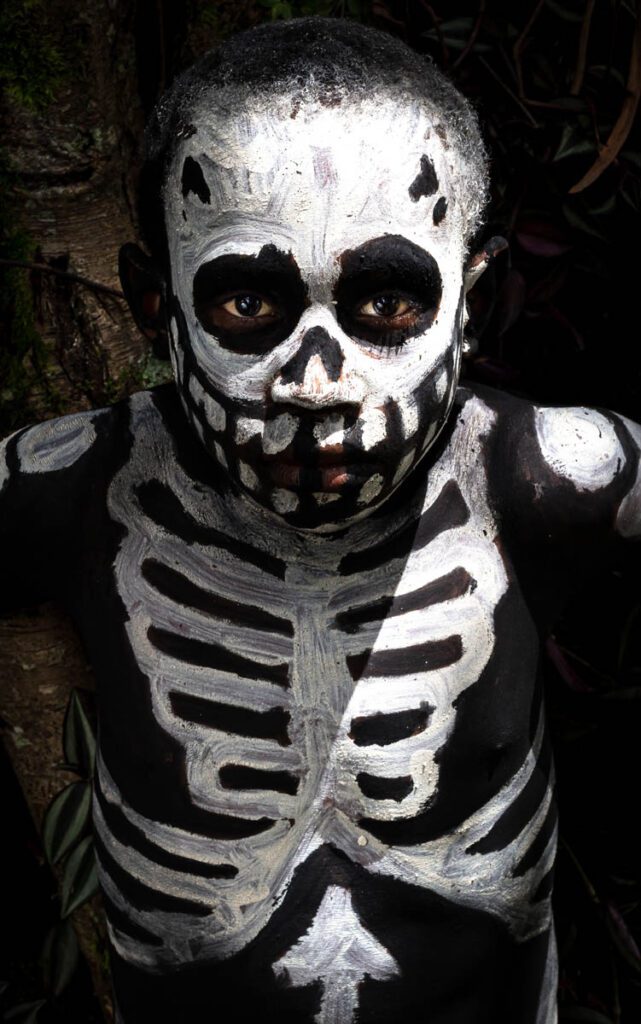
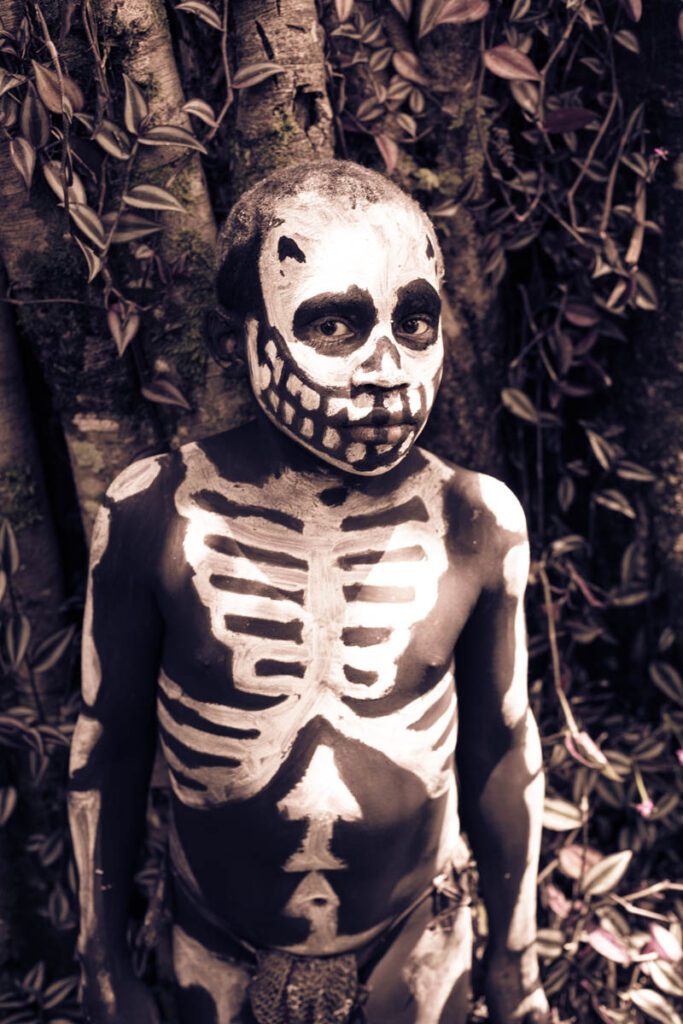
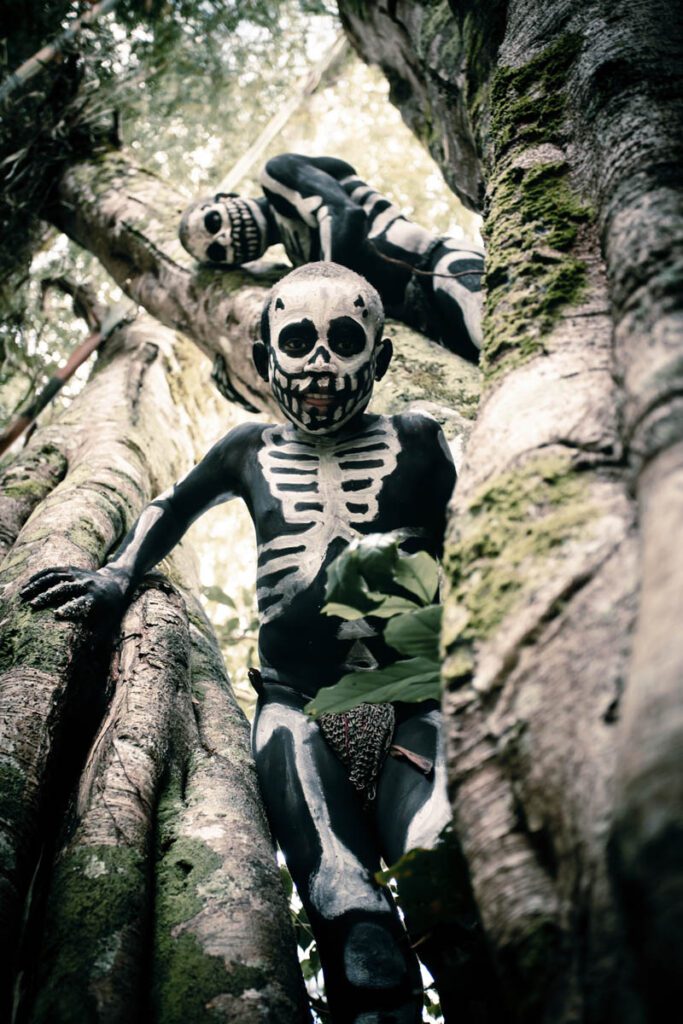
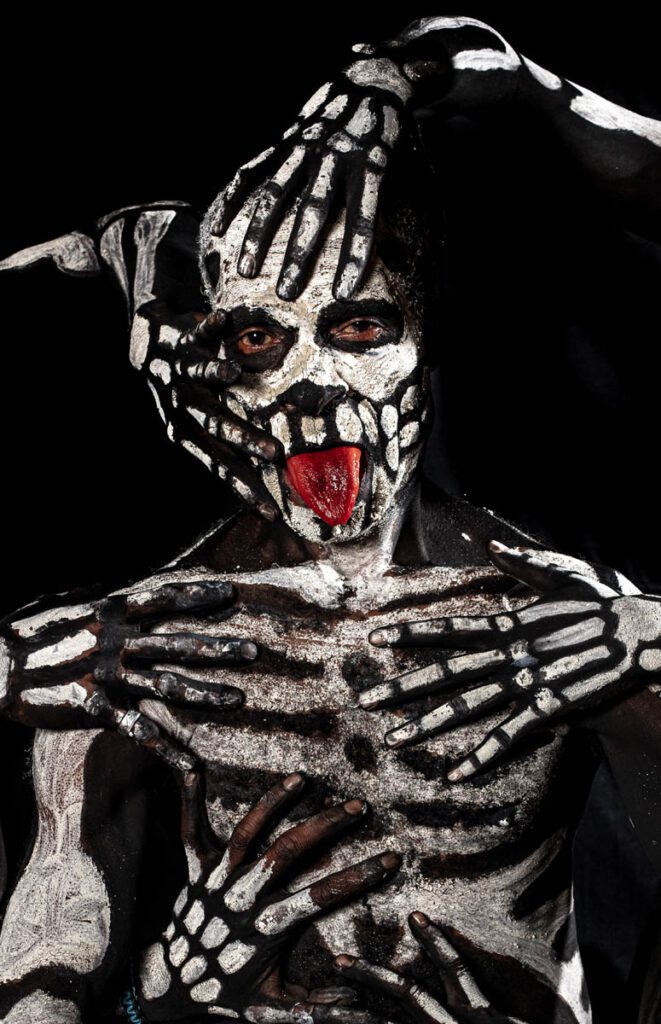
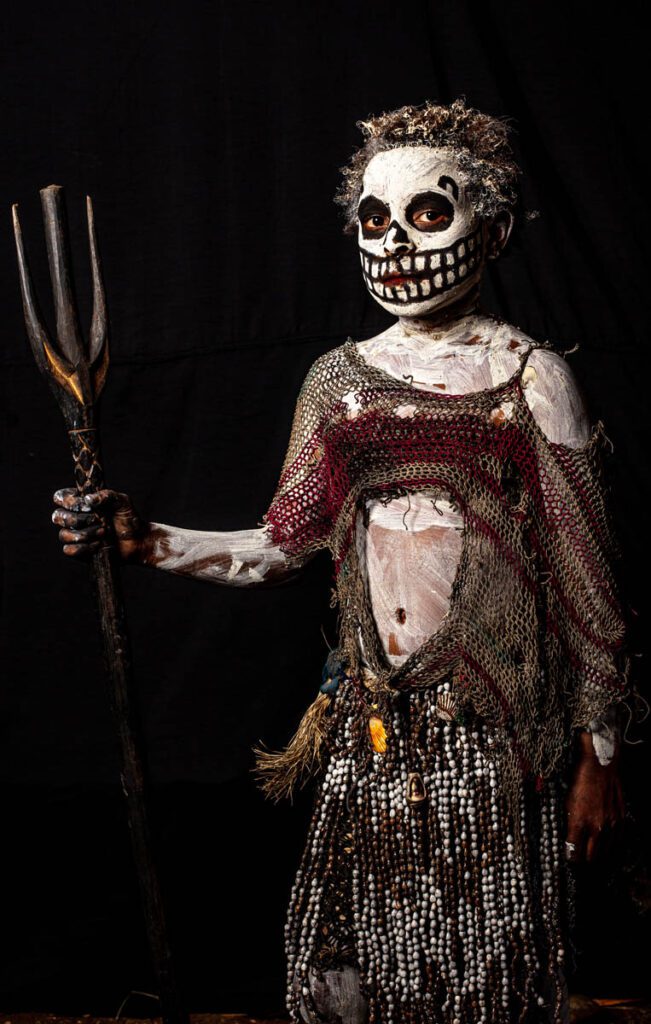
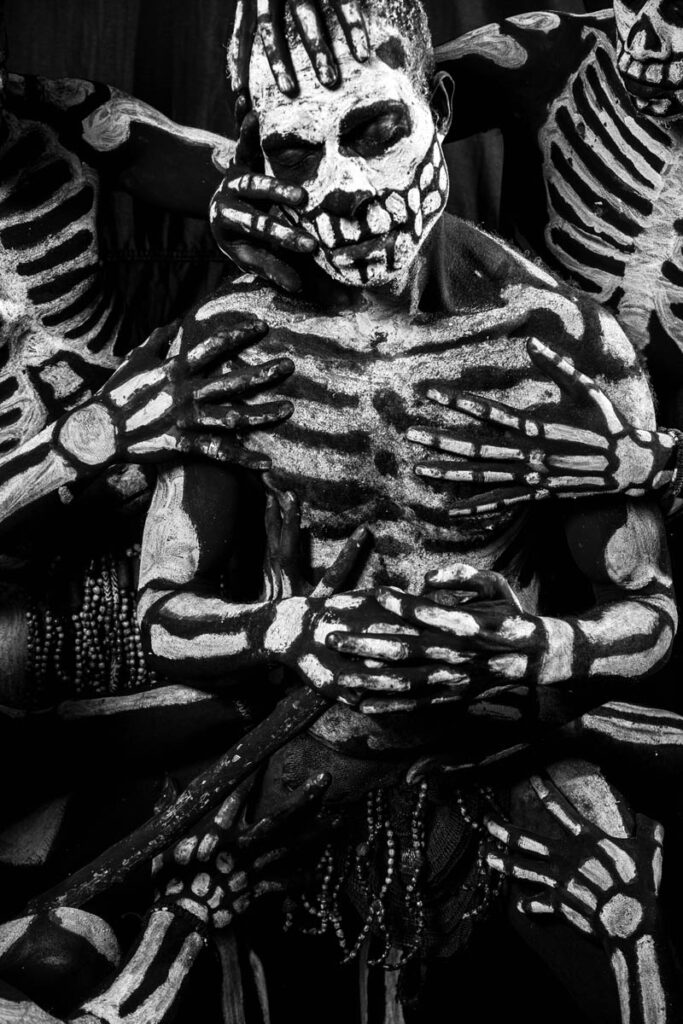
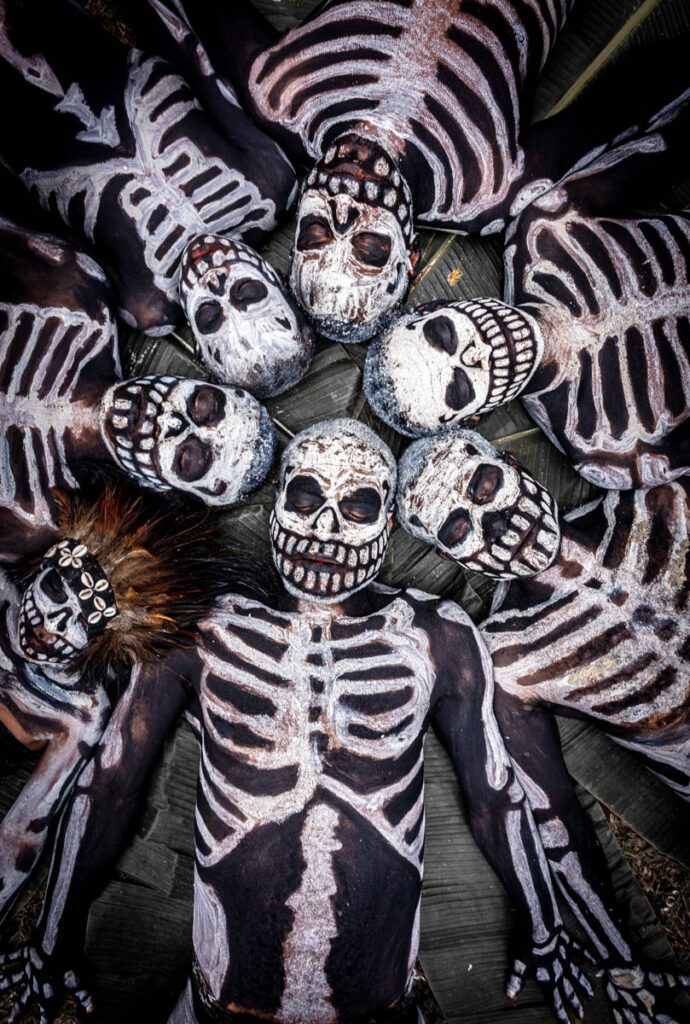
In Mindima, in Papua New Guinea’s Simbu Province, often called Chimbu, the result has become one of the highlands’ most recognisable forms of body painting. Photographs show white bones against darkened skin, transforming living bodies into moving skeletons. The images travel far beyond the community. The explanations accompanying them do not always travel quite so accurately.
For Alphonse, telling the story in his own words is an opportunity to put some of those explanations right.
At the time of this interview, his family estimates that he is about 62. His older brother, Kolkia Dominic Brugl, is around 65. Exact dates are less certain than their recollections of what they learned and did together. Alphonse prefers the name order Brugl Alphonse. He belongs to Bruglgamo, one of three subclans identified in the interview alongside Kombaku and Pendaku, within the wider Narku tribe.
The community described by the family numbers approximately 350 people. It is one community within Mindima, rather than the population of the entire village. This distinction matters in a place where a familiar tourism name can conceal a more particular structure of families, clans and relationships.
“Skeleton Tribe” is the name many visitors recognise. Alphonse’s account brings those visitors closer to the people behind it.
His earliest connection to the tradition came through his grandparents. As a boy, he was interested in the village’s cultural activities and took part in them. During the 1960s, the performances belonged to the generation of his parents and grandparents. By the late 1970s, his older brother was narrating them.
Before tourism became a regular part of village life, the Skeleton performance appeared at Christmas and other community occasions, a few times a year. It celebrated a victory remembered through a local legend. Children could encounter it through people they knew, watching relatives take on the painted forms and dramatic roles that carried the story.
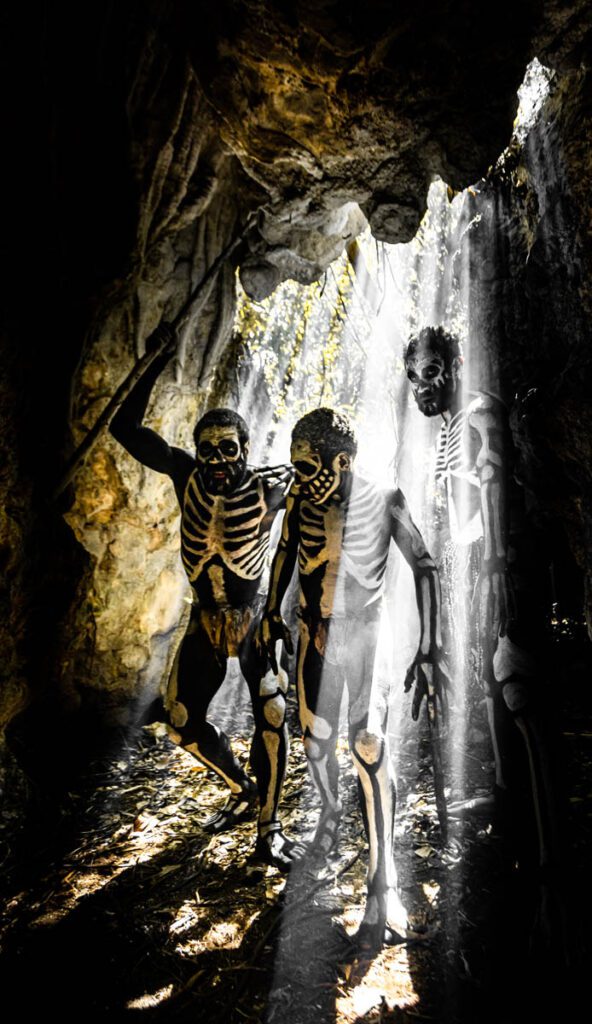
According to the version Alphonse’s family recounts, villagers once went into the mountains to hunt and gather food. Many failed to return. Their disappearance eventually brought a group of young warriors into the mountains to search for them.
The young men discovered a monster’s cave. Outside it lay many bones.
They devised a way to approach the danger: painting bones on their own bodies, they disguised themselves as skeletons. When the monster emerged, they killed it. Their victory ended the threat that had taken the missing villagers.
This is the legend in its essential form, as clarified during the interview. Its setting is the mountain, its adversary a monster, and its decisive act the use of skeletal camouflage by young warriors. It is an inherited account expressed through performance; the interview does not establish a historical date for the events it describes.
Alphonse is clear about its meaning. The body painting belongs to the story of confronting the monster. Explanations that describe it as a disguise invented to frighten neighbouring tribes do not match the account he wishes to pass on.
The distinction changes how a visitor might watch the performance. The painted figures are characters in a narrative of disappearance, resourcefulness and collective action. Their
appearance serves a particular purpose within that story. Understanding the disguise means understanding the danger it was meant to overcome.
It also helps explain why the tradition was worth preserving long before photographers arrived.
The earlier paintings, Alphonse recalls, were similar in concept to those used today, but much rougher. White clay suggested the bones without showing them in great detail. The body was recognisably skeletal, though the individual markings were less carefully developed.
The medical journal gave the brothers another reference. During the 1970s, they studied its illustration and refined their own designs. They were building on something familiar: a form of painting already used by the generations before them.
Too much time has passed for Alphonse to remember the publication’s title or the precise circumstances in which he obtained it. Those details remain beyond the reach of the interview. What the family does remember is the image and what the brothers did with it.
Their contribution was artistic as well as practical. Translating a printed skeleton onto a living body required deciding how the bones should be represented on skin. The journal supplied detail; Alphonse and Kolkia worked that detail into the appearance of their performance.
Their partnership belongs within the longer family history of the tradition. Their grandparents had passed down the story, their parents had performed it, and the brothers helped develop the version that later visitors would come to know.
The materials described in the interview remain closely connected to the surrounding landscape and household life. Black comes from fire ash. White comes from clay and limestone collected in the mountains. Both are mixed with water. Asked whether oil is added, Kawage’s English interpretation is explicit: water only.
The vivid red tongue associated with the performers comes from betel nut.
Preparation also brings people into cooperation. Performers paint what they can reach on their own bodies and help with one another’s backs. The striking finished appearance depends on knowledge that can be shared, repeated and corrected.
Kawage estimates that around 300 of the community’s approximately 350 residents know how to paint the skeleton designs. These are family estimates rather than census figures, but they convey how widely he considers the skill to be understood. In his description, children grow up knowing it too.
That breadth of knowledge offers a different perspective from the solitary portrait that so often represents the Skeleton performers abroad. Beyond the individual photographed figure is a community in which the technique is familiar to many people.
Alphonse’s standing there rests on more than his cultural role. He is also a magistrate, elected in 2003 to responsibilities involving the welfare of villagers and the maintenance of law and order.
His family traces the trust behind that election to his conduct as a younger man. At bride-price ceremonies and funerals, community members contributed money. Alphonse helped manage those contributions, ensuring that people were treated fairly and donations reached their intended recipients.
Villagers noticed his honesty and enthusiasm. Responsibility grew from that reputation.
It is a revealing part of his biography because it places leadership in the everyday work of community life. Managing contributions meant being accountable to people who knew one another and who depended on fair decisions. The family remembers this as the foundation of the confidence villagers placed in him.
The man visitors meet through the Skeleton tradition is therefore also someone whose work has involved settling into a continuing role of public responsibility. The performance and the magistracy occupy different parts of his life, but both connect him to the people around him.
Outside visitors entered that life gradually.
In the interview, 1964 first emerges as the date of the earliest tourist visit. Further clarification changes the description. Those early visitors were missionaries, together with visiting friends and family, during a period when churches were being built. They wanted to see local legends and culture.
The family distinguishes them from the tourists who came later.
Their recollection places the first German tourist visitors in the 1970s, brought by guide Peter Bata through a company remembered as Travelling Top. These details form part of the family’s account of how organised visits began. They mark a shift from people visiting through missionary connections to travellers coming specifically to encounter the area.
For a long time, numbers remained small. Kawage estimates that about a decade before this interview, the community received only 20 to 30 tourists in a year. Some arrived in groups of five or six; others came alone or in pairs.
David Van Driessche remembers that earlier scale from his own visits. Accommodation was modest: a room in a small guesthouse, far removed from the larger lodge that would follow.
By the time of the interview, Kawage estimates annual visits at around 500 to 600, with August and September especially busy. These remain local estimates, but they describe a considerable change in the rhythm and economic importance of welcoming guests.
Visitors now support several kinds of work. Performers receive payments. People sell food and offer arts and crafts. Small village businesses have opportunities that depend on travellers arriving and spending time there.
Asked about the effect of tourism, the account is positive. Alphonse says he is happy with the way things are. He raises no concerns or requests for change during the interview. Kawage describes the income as welcome across the community.
Their testimony gives the story a clear local perspective. Tourism has become something they value and wish to continue, alongside the work of keeping the tradition alive.
The lodge gives physical form to that development.
Construction of the expanded Skeleton Eco Lodge began in 2021, and it opened after the COVID period. Also known as Omo Bruglgamo Skeleton Tribe Eco Lodge, it now has 16 guest rooms and 26 beds, together with a restaurant and kitchen.
Those facilities allow visits to extend beyond a brief performance. Guests can stay, return to the same people and spend more time learning about the cultural life of the area. Kawage describes possibilities for a week or longer, with visits to different locations and experiences arranged through the lodge.
The Skeleton performance remains central, but the range is wider than its name suggests. Insect Hunters and Dust Shakers are among the other groups visitors can encounter. Music includes string bands, bamboo flute and bamboo dancers. Traditional cooking, including mumu, offers another way into local knowledge, while bilas introduces the adornments through which people present themselves for cultural occasions.
The examples supplied for the article also include Pispis Rock, Mekudokodaka, Spirits of Welame, Simbu Play, courting traditions, the Ceremony of the Dead, gardeners, fire dancers and teachings associated with men’s discipline before marriage in the men’s house.
These encompass performances, music, ceremonies and aspects of daily knowledge. Their variety gives the lodge’s longer stays a purpose: there is more to encounter than a succession of painted portraits.
For a photographer, that time can change the work. A longer visit creates opportunities to understand what is being represented, who is taking part and how a particular activity fits into community life. For other travellers, it offers space to move beyond the first striking impression.
The family’s own story provides a thread through those encounters.
Kawage Nick Brugl, who interprets his father’s answers from Chimbu into English and contributes to this account, now helps with lodge operations. His connection to the Skeleton tradition reaches back much further than his current responsibilities.
In 1992, at about one year old and still breastfeeding, he was painted as a little skeleton and taken to the Mount Hagen Show.
It is a brief memory, told through the family, but a fitting image of how participation can begin. Long before he helped explain the tradition to visitors, Kawage had already been included in its public life.
Today, his work extends into another lodge. He has recently built Insect Village Lodge in partnership with Tribes of Papua New Guinea, adding another base for visitors interested in the area’s cultural experiences.
His responsibilities continue the family’s involvement in welcoming outsiders, while his interpretation helps his father’s recollections reach readers beyond Mindima. The task involves more than translating individual words. Dates, names and relationships have needed clarification throughout the interview, as memories are brought together into a written account.
That process reveals how much a familiar travel image can leave unexplained.
Behind the white bones are grandparents who taught a legend, parents who performed it, and two brothers who found inspiration in a medical illustration. Behind the lodge are years of small-scale visits, community decisions and construction. Behind the description of a chief is a man remembered for handling other people’s contributions honestly.
Alphonse’s wish for his children and grandchildren is straightforward: keep the old traditions and culture alive for future generations.
His own life offers an example of what that can involve. He received a story from his grandparents, developed its painted expression with his brother and continued to take part as its audience widened. His son has carried it into childhood experience, adult work and the explanation of its meaning to others.
The young warriors of the legend painted bones on their bodies to confront a danger in the mountains. In Mindima today, the painted bones carry their victory into another generation. Their future rests with people who know the story, understand why it is performed and choose to keep telling it.
For travellers arriving in Mindima, the first encounter may still be visual. The skeleton paintings command attention, and the camera offers an immediate response. But Alphonse’s account gives those photographs a deeper context. The bones represent a disguise within a story, and the people wearing them belong to families whose relationship with that story reaches back beyond the arrival of paying visitors.
David Van Driessche’s interview began partly because explanations circulating about the Skeleton performers did not always agree. Some attributed the painting to attempts to frighten other tribes. Alphonse’s explanation returns it to the mountain, the missing hunters and the
young warriors who confronted the monster. Giving him the opportunity to make that distinction is one of the interview’s most valuable outcomes.
The conversation also reveals the care required when turning spoken memories into a written history. A date initially associated with tourists turns out to concern missionaries and their visitors. A childhood appearance at the Mount Hagen Show belongs to Kawage, rather than his father. Construction dates become clearer through follow-up questions. Each correction brings the account closer to the family’s recollection.
Some details remain uncertain. Alphonse cannot name the medical journal. His age is approximate. The legend has no established historical date. Those gaps belong honestly within the story. What emerges clearly is the sequence the family remembers: an inherited performance, a period of artistic development shared by two brothers, and a gradual expansion of opportunities to welcome visitors.
There is particular value in the brothers’ use of the medical illustration. It records a moment when curiosity became part of cultural practice. Alphonse and Kolkia saw something useful in the printed skeleton and brought its detail into the painting they already knew. Their decision is now part of the tradition’s history, worthy of being remembered alongside the generations who preceded them.
Through Kawage, that history is being explained while its next chapter is taking shape. He interprets his father’s words, helps operate the lodge and develops accommodation of his own. The little skeleton taken to Mount Hagen in 1992 has grown into one of the people responsible for helping visitors understand what they have come to see.
For those visitors, listening offers a way to become more attentive guests. A portrait can preserve the appearance of the painting; a conversation can preserve the name of the person who developed it, the brother who worked beside him and the grandparents from whom they learned.
Alphonse’s hope is that his descendants will continue the work. The materials are available, the painting is widely understood within his community, and the story is still being performed. Its survival will depend on the next generation finding reasons to practise and teach it.
For now, his son is helping tell it. And Alphonse has had the opportunity to explain, in his own language, what he wants people to remember.